Digital Leadership Dialogue
An initiative implemented by the ICT Foundation Nepal that aimed to promote digital governance and integrate technology-driven development into Nepal's political agenda.
Event Overview
The Digital Leadership Dialogue (DLD) is an initiative implemented by the ICT Foundation Nepal that aimed to promote digital governance and integrate technology-driven development into Nepal's political agenda during the pre-election period of 2026.
The program adopted both in-person dialogues and virtual engagement formats to expand participation and ensure nationwide outreach, engaging more than 500 stakeholders.
Participants and resource persons included political leaders, ICT experts, youth representatives, civil society members, media, election candidates, activists, women, people with disabilities, and representatives from marginalized communities.
Key Activities
Digital Leadership Dialogue 1.0 (Feb 5, 2026)
Focused on shaping a digital agenda and strategic priorities for upcoming election manifestos.
Candidate Mela - Virtual Dialogue Series (Feb 18–24, 2026)
Strategic adoption of AI, machine learning, and advanced technologies for competitive advantage.
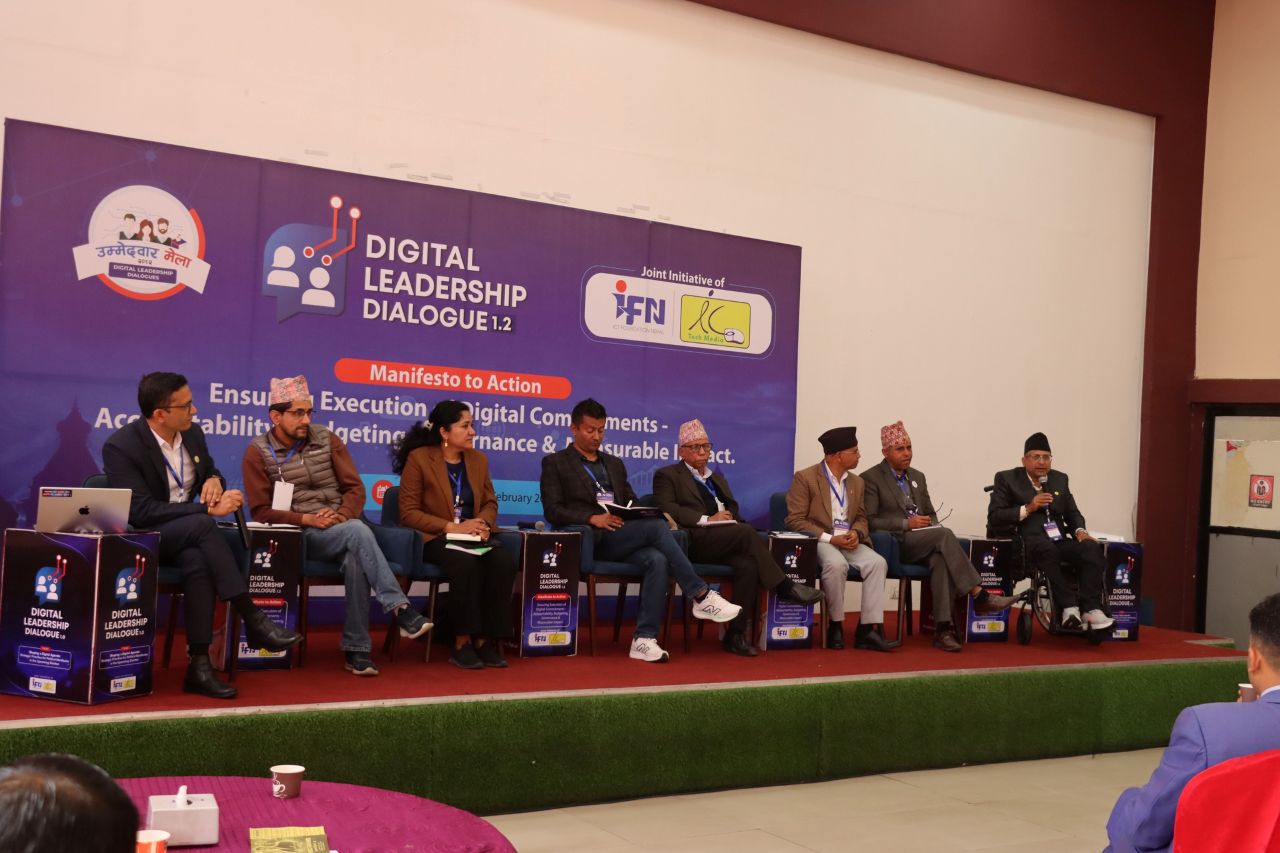
Digital Leadership Dialogue 1.2 (Feb 27, 2026)
Focused on moving from "manifesto to action" by discussing policy implementation, budgeting, and accountability mechanisms.
Key Insights and Outcomes
National Agenda
Political leaders acknowledged that ICT has become a common national agenda that must move beyond written manifestos into practical implementation.
Prioritized Areas
Discussions emphasized digital public infrastructure, e-governance, cybersecurity frameworks, digital literacy, and the potential for Nepal to become a regional IT hub.
Economic Growth
Experts proposed allocating at least 1% of national income to innovation and startups, noting the potential for IT services to be exported from Nepal.
Inclusivity
The program promoted inclusive participation, achieving 39% women representation and engagement from marginalized communities.
Identified Challenges
Resource and Policy Gaps
A mismatch exists between ambitious policy goals and the available financial, technical, and institutional resources for execution.
Structural Realities
There was limited alignment between political commitments and Nepal's existing administrative and institutional realities.
Implementation Weakness
While digital agendas often appear in party documents, their actual prioritization and execution remain weak.